Friday, April 17, 2015

Planting Trees and Other Things

A few days ago, I received some trees from the Arbor Day Foundation. They come with very thorough planting instructions and a color coded guide to what kind of trees you have been sent. The only problem is that the guide is intended for people who are planting the trees in the ground (in their permanent location). We will be buying a house next spring and so we wanted to be able to take these trees with us. I called the Arbor Day Foundation (they were very nice and helpful, by the way) and the woman I spoke to told me that it was acceptable to plant them in pots for a short period of time (1 year or less).
So I had my husband go get some buckets from the store and then my brother in law drilled some holes in the bottom. After the tree roots had soaked for about 5 hours, I divided them up into their buckets. I am really very excited about it and I hope they will do well.


We have 2 each of: American Redwood, Japanese Dogwood, White Flowering Dogwood, Crape-myrtle, Crab-apple, and Hawthorn.

Trees soaking to get the silica gel off.


Filling the buckets with soil. 

Trees with dry leaves for mulch.


While the trees were soaking for five hours, I got started on our main garden. Today I planted beets, kale, carrots, marigolds, nasturtiums, zinnias. sweet pea plants, a gogi berry plant, and coneflower plants (dormant I hope, otherwise I planted something dead).
The tilled garden
I would like to show you what the garden looked like this morning when I got started. Daniel tilled not too long ago and then we have had a lot of rain lately. The soil here is just fantastic. I kept digging up earthworms and there are pieces of pond scum and grass clippings scattered throughout. However, there were like literally a MILLION rocks. I spent a few minutes picking them up and then I just decided to do that as I planted my rows.


There were rocks galore all over the tilled area as well as a lot of ants. I got bitten several times.


A closer picture of the soil. SO MANY ROCKS!


This is only some of the rocks I collected from a very small area. It got to where I could not even move the wheelbarrow!


 Since the soil was tilled and moist from the rain, I just quickly went through with a spade and loosened the soil in a few rows. Then (this is always my favorite part) I sifted through the soil with my hands to separate out as many rocks as I could. Then I put those seeds in the ground!

From right to left: Tomatoes (not planted yet), beets, kale, peppers (not planted yet), purple coneflower, carrots, beets again, sweet pea plants, gogi berry plant, peppers (not planted yet), and further to the left (not in view) zinnias.   
 Here is a lovely photo of the baby sweet pea plant:
 And here is the gogi berry plant:


 I also planted some cherry lemonade coreopsis and zinnias in front of our apartment.


Meanwhile, Mr. Mistoffelees played in the trees. :-) He's a jungle kitty! 


A beautiful picture of a rainbow.

Smudged with dirt - but I had a great day!  


 This is what I looked like after six hours of gardening...
I'm going to be sore tomorrow! Now I'm off to take a shower! I am hoping to plant watermelons, cucumbers, okra, green beans, potatoes, herbs, and gaillardia tomorrow.


Monday, April 6, 2015

Our Garden - 2015

I went out on Saturday to break ground in the land that we will be using for our garden! I did not have a tiller available to me so I just used a spade. I didn't get much finished, but I plan to go out again in a few days and "hand till" a little more. Hopefully, my husband can help me this year at some point!
The un-tilled earth that I will be working with! Its about the same amount of space as last year, just arranged differently.
The lineup this year

Vegetables: 
Goji Berry                                  
Tomatoes: Mortgage Lifter and Climbing Tomatoes            
Zucchini                    
Carrots           
Bell Peppers          
Red Russian Kale              
Watermelon      
Green Beans                  
Hot Pepper Mix               
Pickling Cucumbers        
Blue Potatoes                               
Cylindra and Detroit Dark Red Beets 

Okra

Flowers:
Gaillardia, Arizona Red Shades             
Sweet Pea                                  
Coneflower, Purple                        
Coreopsis, Cherry Lemonade

Marigolds
Nasturtiums
Bee Balm

That's the plan! I may add more flowers as I plant. I am going to plant the flowers in the rows of vegetables this year instead of planting separate rows of flowers. I think the compost that we worked on making ALL LAST YEAR may finally be ready this year. :-) 

Sunday, June 29, 2014

Essential Oils: My experiences so far and some of my recipes!


Recently, I have become really interested in essential oils.

 It all started when I was researching recipes for homemade baby wipe solution. There are a lot of recipes out there on the internet, but the one that stuck out to me was fairly simple - it had lavender and tea tree essential oils, castile soap, olive oil, and water. As I was looking on Vitacost for the oils that I needed, I was impressed and a little overwhelmed with how many essential oils there are available (and Vitacost really does not even have that great of a selection). My family has used tea tree oil (or Melaleuca oil) in the past, but other than that, my exposure to the world of essential oils has been fairly limited. It seemed like something only massage therapists or people who were really crunchy used. 

So I ordered some lavender and sweet orange oil first. A couple of weeks later, I got some tea tree and peppermint oils. By this time I was thinking that essential oils were the bomb-diggity, so I ordered lemon, eucalyptus, and cinnamon leaf (which is really not very pleasant, but I didn't know it was different from cinnamon bark oil). Then, over the next 8 months or so, I added geranium, cederwood, rosemary, grapefruit, oregano, clove, cinnamon bark, sandalwood, myrrh, and frankincense. I recently bought a diffuser necklace in which I can put a few drops of whichever oil I feel like using that day! 


There is a LOT of information about essential oils on the internet, but everyone uses them in their own way, so I want to share with you what I have done with them! Here are some of the recipes I have used and things that I have learned. 

Baby wipe solution: This website has a LOT of good information and recipes for baby wipe solution http://www.zany-zebra.com/cloth-wipe-solution.shtml. I liked the "Castile Solution" (which has lavender and tea tree oil) because my family has really enjoyed and benefitted from tea tree oil in the past, and I had heard good things about castile soap. Here is the basic recipe: 
1 tablespoon almond, apricot, or other oil
1 tablespoon Dr Bronner's Liquid Castile Soap
2 drops tea tree oil
1 drop lavender oil
1 cup water

When I make mine, I usually make a large amount at a time, I altered it slightly and I mix it in a certain way so that the essential oils blend in well with the other organic ingredients. 
1. Pour in 8 cups of purified drinking water
2. Measure out a quarter cup of olive oil, put 8 drops of lavender essential oil and 8 drops of tea tree essential oil into the measuring cup with the oil. Dump all of this into the container with the water.
3. Using the same measuring cup, measure out about 1/8 cup of castile soap. Pour that in. 
4. Put the cap/lid on and shake. The soap will bubble and pressure will build up, so be careful not to spray yourself in the face when you open it up again. :-) 

General Cleaning Solution: A great all-purpose cleaner that I use is simply a mixture of purified water, white vinegar, and essential oils. Everyone has their own preference as to how much vinegar to use. I like to use equal parts water and vinegar. Put in about 5-10 drops of essential oil for a typical 32 oz. spray bottle. 
** A lot of people seem to really dislike the smell of vinegar when they are cleaning. However, in my experience, the vinegar smell does not linger for very long, the smell of the essential oils (depending on purity and concentration) does tend to stay though! 

Some essential oil mixes I have used for cleaners:
-Peppermint and oregano.  At my house, we have spiders literally coming up through the floors - they are everywhere. Peppermint is thought to deter pests in general, but especially spiders. Oregano is also used as a pest deterrent. 
-Lavender, sweet orange, and lemon. Citrus and floral essential oils go well together. This is one of my favorite mixtures to use. Lemon has antibacterial properties. 
-Thieves. Thieves is a mixture of lemon, eucalyptus, rosemary, clove, and cinnamon bark essential oils. The buzz about thieves is that it is great for protecting your immune system. Using thieves can help keep you healthy - and I really do like the way it smells. 
Something I would NOT recommend is to mix cinnamon leaf oil and vinegar, simply because the result smells just like ketchup in my opinion! My house smelled like McDonald's when I did this. 

Vicks VapoRub alternative: My husband has pretty bad seasonal allergies that bother him frequently. I concocted a mixture that did seem to help him sleep. I kind of threw it together, so there is no real recipe with actual amounts. Generally, when I make a mixture with coconut oil, I don't use more than 1/2 cup of coconut oil at time because it is relatively expensive and if the lid gets lost, our lovely kitties like to stick their paws in it. :-) For the essential oils, a good rule of thumb is to mix 1 drop of oil for every teaspoon of carrier oil (in this case, the coconut and olive oil) This website has a great chart for diluting oils http://www.nourishingtreasures.com/index.php/2013/06/25/essential-oil-dilution-chart-dilution-guidelines-and-measurement-equivalents/ 
Here are the ingredients for my allergy-sinus rub:
-Eucalyptus
-Lemon
-Peppermint
-Clove 
-Lavender
-Olive oil
-Coconut oil
This website goes into a bit of detail about why these are good for the sinuses: http://www.organicauthority.com/health/essential-oils-to-relieve-hayfever-allergies.html   
This mixture works especially well when rubbed onto the chest before bedtime. Chamomile tea with honey and lemon are also wonderful to consume at bedtime to help you sleep, especially if you are feeling crummy. 

Body Butter: When I got started with essential oils, I also became very interested in coconut oil and all of its benefits! I started to use it by using it as a moisturizer/lotion - all by itself! But then I realized that it was a great opportunity to get some of the benefits of essential oils. Again, there are bukus of recipes for body butters and moisturizers, but this is the one that I like to use. As before, there are no amounts listed. When I make this, I put in a large spoonful of coconut oil, drizzle some olive oil, and squirt several drops of the essential oils into a very small container. (A small jar would work well). The ingredients:
-Frankincense
-Lavender
-Sweet Orange
-Sandalwood
-Coconut oil
-Olive Oil
Frankincense is excellent for the skin, it is said to reduce scarring and help healing. Sandalwood  and lavender are very relaxing, and sweet orange is antibacterial (it is also my favorite essential oil) and it causes your brain to release endorphins - making you feel happy! 
There are so many health benefits to the essential oils - COMING SOON.. a more detailed list of essential oils and their benefits.  

Thanks for reading! 

Tuesday, April 29, 2014

Progress: Some Success So Far


Well our garden has really started to take off! I am really surprised at some of our success. There are a few things that are doing really well that I did not expect to do well. However, we do have some seeds which have failed dismally to sprout. Mainly, the peppers and the marigolds. I am quite surprised that the four packs of marigold seeds I planted in various places have not sprouted, others in this area seem to be able to grow them easily. The peppers not coming up is not as surprising to me, they were some of the window box plants that got too dry and died. If we need to, we will get more seeds or pick up some more plants. I really do want to have peppers in the garden, if they grow they are supposed to do very well in this area. 

Here are some pictures of our little seedlings, I love going outside each day and seeing new ones. It makes me feel like I am not a total failure after all! 

By the door we have cilantro (mixed with a lot of weeds) and a LOT of zinnias! 
Cilantro (transplant on bottom, seedlings above) and weeds
Zinnia sprouts
Day lilies
The transplanted day lilies are doing better every day. Once they got over the shock of being transplanted and started getting a little more water, they started looking much more healthy. 
The transplanted amaryllis is doing well, we had several blooms which are now starting to die. 
Amaryllis
The rosebush is just thriving and producing a lot of blooms. I am so happy that it is doing well. Seeing those flowers every day is great.

The spinach is taking off as well... 

American spinach
I think the radishes are doing the best. 
Radishes
These are my pinto bush beans that I planted less about a week ago that are already sprouting! I will have to get that trellis up soon!
Pinto beans sprouting! 
This picture of by beet sprouts makes it a little hard to see them. The beet seeds I planted are a mix. Detroit dark red, Burpee's golden, Chioggia, Bull's Blood, Albino, and Clylindras. 
Beet sprouts
The squash I am SO excited about - I LOVE love love to eat squash. I hope these plants do really well! 
Squash, YAY! 
The carrots are doing well, this was another mixture. There are Scarlet Nantes, Jaune du Daubs, Lunar White, and Dragon carrots. 
Carrots
The sunflowers are growing well, I am really excited to have these in the garden because they will be so cheery! 
Sunflower sprouts. I planted these next to cucumber seed so that the cucumbers can grow up the stalks. 
I planted some wildflowers next to the bean plants and they are growing. I hope all the flowers that I planted do well. It will attract bees and butterflies. 

The tomato and pepper transplants are doing very well. I think the tomatoes are what I am most excited about in this whole garden because I love tomatoes even more than I love squash! My husband doesn't, but I am going to feed some to my daughter and hopefully she will like them! :-) These precious kittens love to be outside. 

Kaante and Mr. Mistoffelees next to the tomatoes

 So there it is! My garden :-) I hope that everything continues to thrive. We should have some compost ready soon to spread onto the garden. The sand is not the best for growing vegetables. But they are growing nevertheless!


Monday, April 21, 2014

Spring Fever: Planting after the last frost

I am so very excited about my garden now that I can plant everything! 

First of all, I would like to say that growing plants in our windows was a complete failure :-(. We did have some plants come up, but then they got too dry. I watered them every day, but they just died on me anyway! But - we did transfer the potting soil and the remaining seeds into the ground. So hopefully, we will be able to keep the ground wet enough with soaker and sprinkler hoses to keep things alive.

The first thing we have had bloom is our rosebush! The roses are kind of a fuchsia/lipstick pink.We didn't plant this bush, but I did prune it a few months ago and I am so very glad I did! I am not sure what kind of rosebush it is, but I will do some research and then I will know how to take care of it throughout the summer. 

The chile plants
The South Garden
The "South Garden" area has the following things planted in it from left to right: Sunflowers, cucumbers, okra, basil and tomatoes, squash, cayenne peppers (with a New Mexico chile pepper plant at the end of the row), Jalapeno peppers (with a Sandia chile pepper plant at the end of the row), Romanian peppers, and banana peppers.  


The tomato plants
The tomato plants are all heirloom plants we got at Home Depot because our lovely cats spilled the planter that the tomatoes were growing in. (Those were actually our only successful window plants!) 

We have Mortgage Lifter, German Johnson, Red Beefsteak, Purple Cherokee, and Marion tomatoes (all are heirloom tomatoes).


The New Mexico and Sandia Chile pepper plants were also from Home Depot because I was worried that the other pepper plants would not do very well. 

Lily and bee balm transplants, marigolds are to the right of the Bee Balm, kale is to the right of the lilies. 
I planted beans here in front of our steps
In front of our sidewalk, we have a nice little area with a variety of things. From left to right, we have bee balm, marigolds, and lilies, then in the middle there are nasturiums and below them are kale. Then to the right I planted wildflowers and pinto bush beans. Then furthest right (close to the pepper plants) I planted anasazi beans and a few nasturtium seeds. I am planning to put some trellises in the garden for the beans.

Bee balm 


In front of our window, I planted cilantro and Zinnias. There are no plants here yet, but we are watering faithfully every day! 


I put up a "Welcome" sign near the corner of our house and I love it!

The "East Garden" area is by far the biggest area we have and we are still figuring out how to arrange the hoses so that we will get enough water to everything. From left to right (or south to north) we planted marigolds, beets, carrots, spinach, chives, radishes, onions, marigolds, oregano, echinacea, sweet peas, parsley, and cosmos. We still have room for three more rows, so I am going to ask Daniel what vegetable we left out that he wants to plant. I am thinking zucchini and maybe green beans. 


Anyway, this has been so fun and exciting. We actually have some beets coming up already, I hope the other things come up as well. It is all a grand experiment.

Oh, and we have not added any compost yet because I keep adding stuff to the bin. I am thinking about getting a separate bucket to put scraps in for a few weeks so that we can get all the compost in the bin ready to spread on the garden. We have quite a bit and I think it will really help our plants!


Monday, March 3, 2014

9 Flowers and Their Benefit to Vegetable Gardens


We are not only going to plant vegetables in our garden, we will have some flowers as well. Flowers are not just pretty faces in vegetable gardens, they have many benefits such as bringing in good insects and pollinators and keeping out pests.

I have included a lot of information about the benefits of each flower, including Wikipedia links. For example, if you don't know what a "thrip" is (I didn't know before today!) then click on the link to read more about it!

Marigolds, Nasturtiums, Zinnias, Sunflowers, and Herbs such as Lavender. If I can get my hands on some Bee Balm, Cosmos, Calendula and Borage seeds, we will plant those as well.


1. Marigolds.(Signet marigolds have edible flowers) 
These cheery yellow flowers are helpful for keeping a variety of pests away from the garden. Rabbits, deer, javalinas, rodents, are peccary are even said to be deterred by marigolds. This is particularly relevant to us because we have an abundance of rabbits! They will hopefully also help with keeping squash bugs away. Other critters they repel are mosquitoes, slugs, roundworms, thrips, tomato hornworms, and whiteflies. We will make sure to plant these next to the squash and or the tomatoes!
These need to be planted outside after the last frost. If there was a superhero/rockstar flower of the vegetable garden, the marigold would be it! 


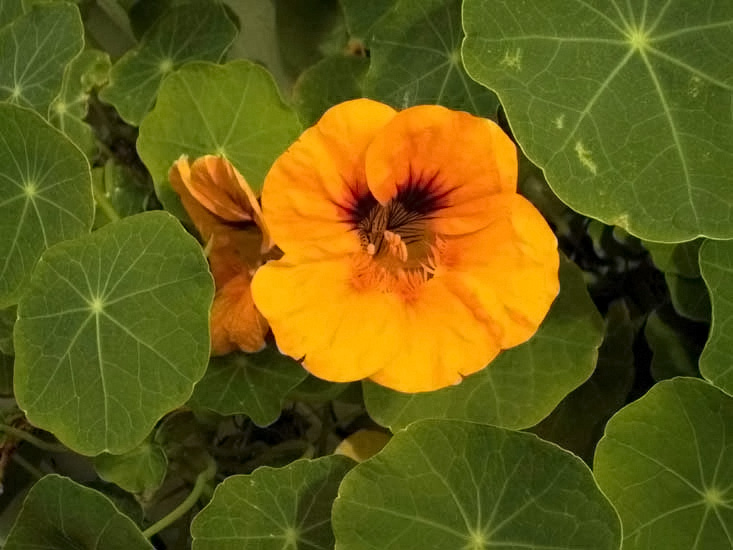
2. Nasturtiums. (Edible flowers and leaves)
These flowers will help keep squash bugs, white flies, and  beetles away. These are considered a trap crop for aphids, which will get into things like cabbage, collards, kale, turnips, mustard, broccoli, cauliflower, brussel sprouts and radishes. A good place to plant these will be next to the squash or kale. 
Nasturtium leaves and flowers are also edible! I will have to try them at some point this summer.
The package of seeds I have says that these do not transplant well and that one should be careful not to water them too much.


3.Zinnias (We are planting "California Giants") (Edible flowers)
Zinnias will attract bees, butterflies, and hummingbirds. These are good flowers to plant near a window, because they grow to be large (2 to 3 feet.)

The package of seeds says that these can be started indoors about a month before the last frost and then transplanted outside. These need plenty of water.


4. Sunflowers  (Edible Flowers and Seeds) 
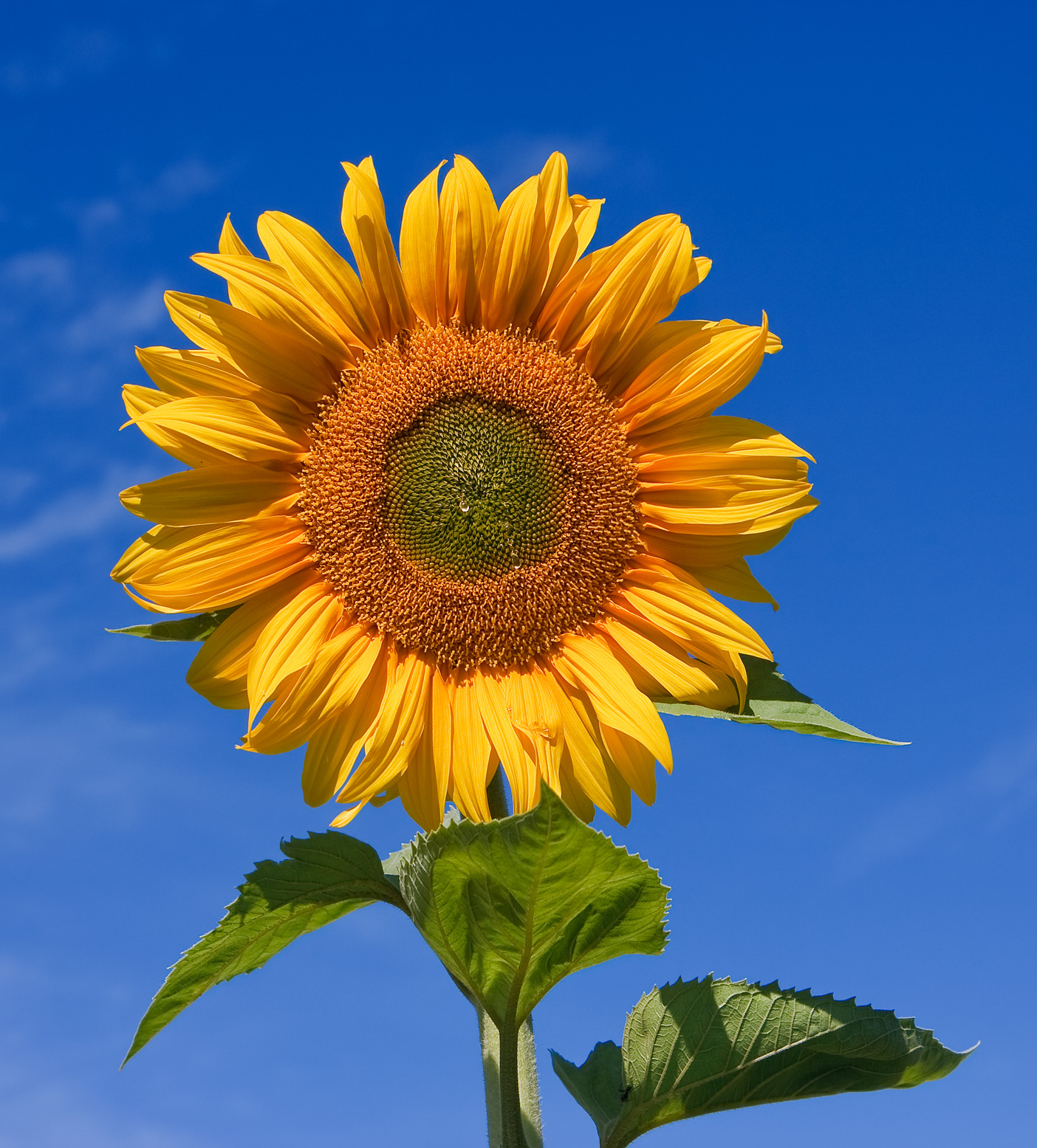
Who doesn't love sunflowers?
Sunflowers are great flowers to have in the garden because they attract pollinators like bees and butterflies, and they can also be trellises for climbing plants like beans.
They do have some negative alleopathic effects on other plants, however. (Some say they are toxic to certain vegetable plants). So these might need to be isolated a little bit from the other plants in the garden.
The sunflowers grown from the seeds we have will grow to be 4 to 6 feet. I think I would like to have them in the South Garden right in front of my big window. They will be beautiful to look at and they will get enough sun in that spot.


5. Lavender  (We are planting Vera Lavender)
(English Lavender flowers and leaves are edible) 
Lavender smells wonderful to humans, but not to certain pests such as deer, mice, ticks, cabbage moths and even mosquitoes and flies.

These need to be started inside and "acclimated" to direct sunligh tor "hardened off." This means that the plants will need to be exposed to the elements gradually. This is an interesting process that involves starting them indoors, then allowing them to spend a little time outdoors each day (progressively more time each day) until you finally transplant them into the ground.
I will probably put these in the south side of the East Garden (it is the sunniest spot in the East Garden) when they are fully hardened off. We will definitely be dehydrating much of what we grow to be used later in tea and other things.

6. Bee Balm (Edible flowers)
This beautiful flower attracts bees, butterflies, and hummingbirds. It is also said to repel some soil pests and mosquitoes. Planting it near tomatoes is said to improve flavor.

This flower is also called bergamot, and it smells like bergamot orange (which is used for Earl Grey tea)

Bee balm actually can be used to treat bee stings and it a good general antiseptic. We will definitely be dehydrating a lot of this!

7. Cosmos (NOT edible)
Cosmos can attract bees and lacewings. Lacewings are the vegetable gardener's ally because they consume pests like aphids, thrips, and scale insects.
These flowers can also attract ladybugs, hoverflies, and wasps (this is beneficial!)

These can be planted anywhere in the garden. They will brighten it up quite a bit!


8. Calendula (Edible flowers)
Calendulas attract aphids and can be used as a trap crop for vegetables that have problems with aphids. These flowers also deter tomato hornworms and asparagus beetles.And because they are bright, they will attract pollinators.
I am really looking forward to dehydrating calendula because it has many medicinal uses, such as being anti-inflammatory, anti-viral, and anti-tumor. It can be used to treat acne, abdominal cramps, and constipation. Read more about uses of Calendula: http://mountainroseblog.com/healing-calendula/
9. Borage  (Edible flowers)

Borage is a beautiful flower that is very effective at attracting wasps, bees and other pollinators. They can deter tomato hornworms, cabbage worms, and manduca moths. It is said to be a good companion to tomatoes, legumes, spinach, and strawberries.


Read more about companion planting and flowers that will benefit your vegetable garden! 
http://savingkathy.hubpages.com/hub/Vegetable-Garden-Companion-Plants http://www.ghorganics.com/page2.html 
http://gardening.about.com/od/vegetable1/tp/Flower-For-The-Vegetable-Garden.htm
http://www.livingspace360.com/index.php/best-annual-flowers-to-plant-in-the-vegetable-garden-28883/